A study, not a shipped product.
Context
An assignment in ibimbing's Product and Project Management bootcamp (batch 17), in 2025: read an existing product as a business. I chose M-TIX, the app Cinema XXI made to widen its sales channels: booking tickets, showtimes, paying online, food and drinks, promotions and private screenings.
The people
Moviegoers aged 17 to 35 in Indonesia's big cities: students and working people with middle to upper incomes, who keep up with what's trending, go to the cinema more than twice a month, plan around their schedules, and have no patience for a failed payment.
The tension
Three pain points. Discovery is weak and barely personalized: a UX survey I cited found 66.7% of users open the app only to buy a ticket. Payments are slow to validate and often fail: a study of the system in Malang put successful transactions at 75.8%. And promotions cannot be measured, so ads reach people they do not fit.
Decisions
A product vision, and a strategy split between acquisition and retention: smooth and safe booking, flexible payments, social media and incentives for new users, personalized film information, a loyalty program, exclusive content through partners, and growth and promotion measured with data.
Craft
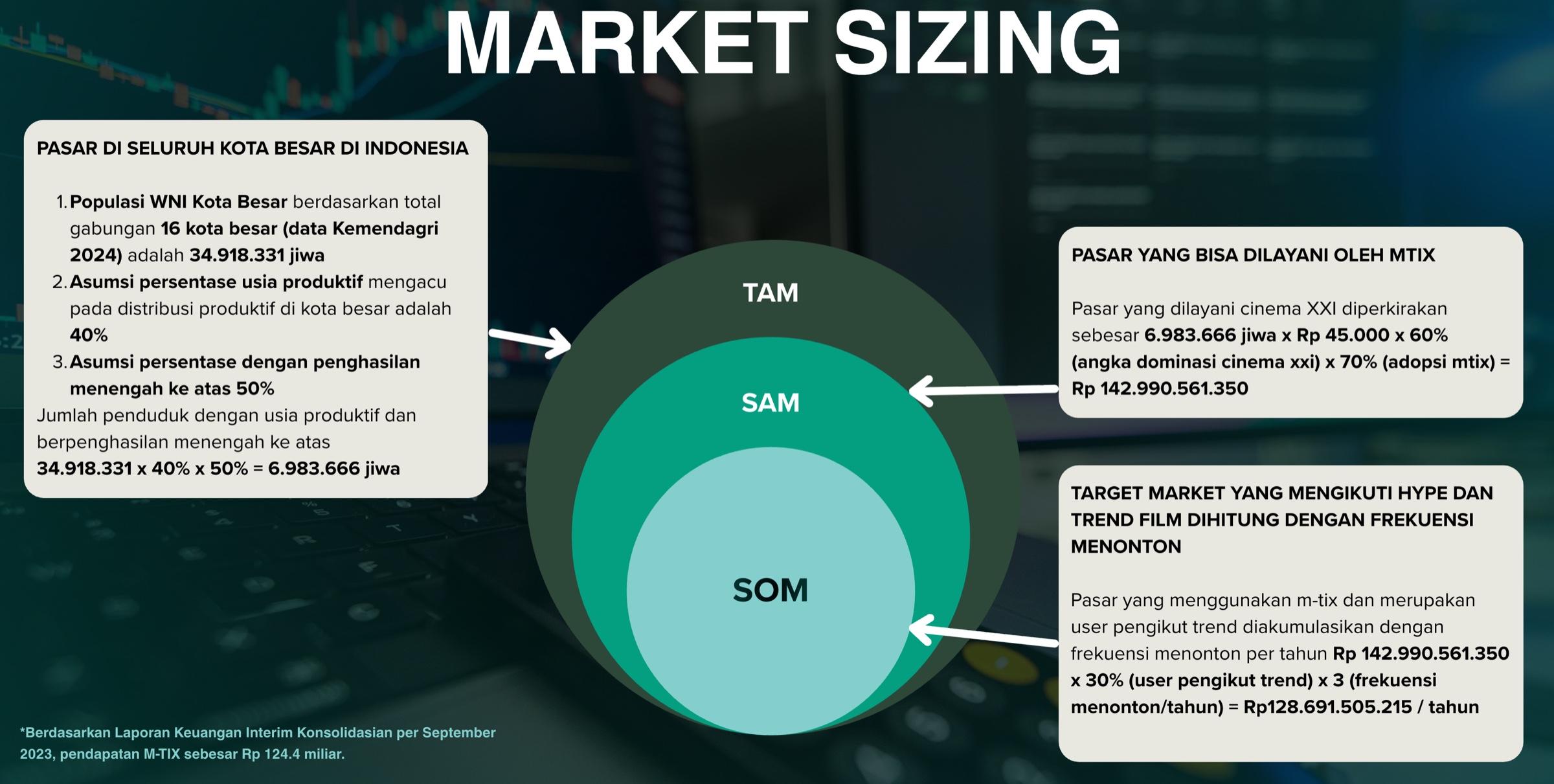
Market sizing from the 2024 population of 16 big Indonesian cities, 34.9 million people, narrowed by age and income to about 7 million. Three OKRs: activate new users (first bookings within seven days of sign-up, from 10% to 35%), bring them back with personalized discovery (repeat purchases, from 5% to 20%), and remove what stops a booking (payment failures, from 30% to 5%). The business processes, from scheduling to booking, are mapped in Miro.